英文簡報為什麼總是少了「策略感」?7 種結構教你像顧問一樣表達

兩位 PM,講同一個議題:「明年要不要進攻日本市場?」
PM A 開場:「I’d like to share our analysis of the Japan market. Japan’s e-commerce market is large. Consumer spending is up. There are also several competitors we need to consider…」花了 6 分鐘鋪陳,最後 30 秒才講到行動方案。PM B 開場:
“Let me map out three scenarios for our Japan entry. In Scenario A, we partner with a local incumbent — capex stays flat, but we lose brand equity. In Scenario B, we go direct — full margin, slower ramp. In Scenario C, we wait — we cede market share but redeploy capital to Southeast Asia. What’s robust across all three is…”
三個 scenario 攤開、收束在策略 implication,9 分鐘講完。兩個人字彙量、簡報技巧、市場知識都差不多。但聽完之後,誰會被 CEO 記住?差別不是英文,是簡報的結構。母語者顧問做英文簡報之前,腦中會先選一個「結構」——結構不是 PowerPoint 的版型,是觀點被組裝起來的形狀。McKinsey、BCG、Bain 從新人第一天就在訓練這個。本文整理 7 種高階英文簡報結構與選擇邏輯,附 1 張 5 秒決策樹,讓你下次提案聽起來像顧問。想先補齊母語者的 7 個論述框架,請看 母語者必學的 7 個英文思辨框架完整指南。
簡報的差別不在內容,是結構決定了你聽起來像誰
分析師習慣「資料堆疊型」開場——context、context、context、conclusion;顧問習慣「結論前置型」——conclusion、because、therefore。同樣內容、不同形狀,聽眾耳裡是兩個身份的人。結構不是 PowerPoint 骨架,是你 stance 的容器。沒結構的英文簡報,再多投影片都聽起來像 update、不像 recommendation。延伸請看英文簡報怎麼做?開場到 Q&A 完整架構指南。
為什麼 PREP 不夠用了——進階場景需要 7 種結構
多數英文簡報教學停在 PREP(Point-Reason-Example-Point)和 SCQA(Situation-Complication-Question-Answer)——這兩個是 B2/C1 入門結構,夠用在「分享觀點」、不夠用在「推動策略」。C1+ 學員真正卡的是:簡報情境變複雜(多選項評估、未來推演、戰略推演),單一 PREP 撐不住。本文要講的 7 種結構,是「PREP 之後」的進階武器庫。如果你 fluency 與 articulation 的差別還沒打通,先讀 英文已經流利了,為什麼說話沒人聽?C1 學員突破天花板完整指南。
7 種高階英文簡報結構速覽(一張表先看懂)
先用一張表建立 7 種英文簡報結構的全篇地圖。每個結構對應一個 speaking persona——這是結構選擇就是身份選擇的核心命題:同一內容包進 7 種結構,你會聽起來像 7 個不同的人。
| 結構 | 一句話定義 | 適合場景 | Speaking persona | 等級 |
|---|---|---|---|---|
| PREP | Point → Reason → Example → Point | 會議發言、電梯 pitch | The Communicator | 基礎 |
| SCQA | Situation → Complication → Question → Answer | 開場 storytelling | The Storyteller | 基礎 |
| PCS | Problem → Cause → Solution | 問題拆解、提案 | The Problem Solver | 基礎 |
| Comparative Analysis | 逐 dimension 比較選項 | 選項評估、董事會決策 | The Analyst | 中階 |
| Future Projection | If-then 系統推理 | 趨勢推演、談判 | The Strategist | 中階 |
| Scenario Mapping | 多重情境平行推演 | 戰略簡報、政策層 | The Foresight Practitioner | 中階 |
| Pyramid Principle | 結論在頂、依據往下展開 | 顧問 deck、執行摘要 | The Advisor | 顧問經典 |
基礎三個(PREP/SCQA/PCS)是 setup,多數 B2 學員已經在用;中階三個(Comparative/Future Projection/Scenario Mapping)是分析型武器,C1+ 必須加練;Pyramid 是 meta-structure,管前 6 種結構(後文會展開)。本文跳過 PREP/SCQA——兩者是基礎,本文聚焦進階。如果你還在 PREP 階段(這也是 CBA 框架的入門變體),先補基本功請看 CBA 框架完整指南。
同一議題用不同結構開場,你會被聽眾認知為不同的人。講「該不該進日本」用 PCS 像 The Problem Solver——「Japan revenue is declining 18% YoY. Three causes — competitor launch, team turnover, localization cuts. Here’s what I’d propose.」換 Future Projection 像 The Strategist——「Let me walk through what happens if we don’t enter Japan in the next 18 months…」換 Pyramid 像 The Advisor——「My recommendation is to enter Japan in 2027 via partnership, with three supporting reasons…」同一議題包進 7 種結構,你在聽眾耳裡變成 7 個不同身份的人——這就是「結構選擇就是身份選擇」的實際長相。
PCS 結構:怎麼把問題拆成讓 CEO 聽得懂的提案?
PCS(Problem-Cause-Solution)是 7 種英文簡報結構中最常見的商業提案結構。聽眾已經知道有問題,但他們需要你診斷原因 + 給解方。場景:跨部門問題對齊(向 CEO 報告 churn 上升)、產品提案開場、post-mortem。PCS 不適合用在哪?對方還沒承認 problem 存在的時候——會被反問 “Wait, is that even a problem?”——這時要先用 SCQA 鋪情境。
PCS 完整英文簡報範例:日本子公司業績下滑
場景:你是策略總監,向 CEO 報告為什麼日本子公司業績下滑、提出復甦方案。背景數據:JETRO 2024 調查顯示日本外資企業 2024 年營收成長 1% 以上的比例僅 48.7%、較前年下降 6.6 個百分點。投影片三頁分為 Problem / Cause / Solution:
Slide 1 (Problem): “Japan revenue declined 18% year-over-year in Q3, dragging total APAC growth from a projected 6% to 1.2%.”
Slide 2 (Cause): “Three drivers explain this. First, our largest local competitor launched a competing service in March. Second, our local team turnover hit 34% in the past 12 months. Third, we deprioritized localization spend by 40% last fiscal year.”
Slide 3 (Solution): “Three actions, sequenced. Reinvest 60% of the cut localization budget into Q1; replace half of the vacant Japan team with senior local hires by end of Q4; and explore a partnership pilot with one regional incumbent. Bottom line — we have six months before this becomes structural.”
解析重點:PCS 必有的 marker—— “Three drivers explain this” 與「Bottom line —」是 signposting 標誌。Problem 一句話定義 + 一個 critical 數字;Cause 用 “First / Second / Third” 平行句式,必須是 root cause 不是 symptom;Solution 給 sequenced action + bottom line 收尾,否則會被當成 wishful thinking。注:18% YoY、34% turnover、APAC 為示意情境,JETRO 為 verified baseline。
PCS 簡報常踩的 2 個坑
- 坑一:Problem 段太冗長(堆數據、給歷史背景)→ 聽眾還沒進入 Cause 就累了。修法:Problem 一句話定義 + 一個 critical 數字。
- 坑二:Cause 段給的是 symptom 不是 root cause(「業績下滑因為 conversion 不好」是 symptom)。修法:用 “What’s actually driving this is…” 強迫自己進入根因層。延伸跨國會議溝通技巧請看跨國會議發言句型完整指南。
Comparative Analysis 結構:怎麼用英文簡報做選項評估?
Comparative Analysis 是 C1+ 學員最容易掉漆的結構——他們會直接跳到結論,沒有 dimension by dimension 的對比。母語者顧問做這個結構,幾乎一定會給「對齊矩陣」(橫軸選項、縱軸 dimension 的表格)。HBR 2024 Should Your Company Build an Open or Closed Ecosystem? 開場示範了標誌語法 “Similarly…”,把不同產業壓在同一條比較軸——詳見 高階英文怎麼說有份量?母語者必學的 7 個英文思辨框架。
Comparative Analysis 完整英文簡報範例:CMO 廣告策略 A/B/C
場景:你是 CMO,向董事會比較 3 個明年廣告策略選項(A:擴大 brand campaign、B:聚焦 performance、C:兩者各半)。投影片中央是 4 dimension × 3 option 對齊矩陣。權威基線:Binet & Field 60/40 Rule(IPA 2013 Long & Short of It,覆蓋 996 個案例)指出最有效的 campaign 是 60% brand-building + 40% sales activation。完整英文文本:
“Across four dimensions — cost, brand equity, short-term ROAS, and risk — let me compare three media strategy options for 2027.
Cost: Option A scales brand campaigns at 1.4x current spend; Option B holds flat focused on performance; Option C splits the difference at 1.15x.
Brand equity: A builds incremental long-term value, consistent with Binet and Field’s IPA finding that brands allocating below 40% to brand-building underperform on five-year profit growth. B holds, with measurable risk of brand erosion. C lifts modestly.
Short-term ROAS: A trades near-term efficiency for long-term moat. B optimizes ROAS today but offers no compounding. C delivers about 80% of B’s near-term efficiency.
What this comparison surfaces is — Option C delivers the only path that doesn’t trade off long-term equity for short-term ROAS. My recommendation: pursue Option C with a six-month operational readiness plan first.”
解析重點:平行句式(”Cost: A is…, B is…, C is…”)貫穿 4 個 dimension,是 Comparative Analysis 的標誌語法;”What this comparison surfaces is —” 是收束句標誌,告訴聽眾「比完之後的 implication 是什麼」。投影片矩陣 + 口頭平行句式 = 雙重 reinforcement,是顧問風格的標準套路。常踩 2 坑:dimension 沒對齊(X 用價格 vs Y 用品質)→ 不是比較是 list;沒有 implication 收尾→ 純比較讓聽眾「So what?」。
Future Projection 結構:怎麼用 if-then 推演讓老闆感受到時間壓力?
Future Projection 是談判最強武器——把 status quo 的隱性成本算給對方看,讓對方自己推導出「不行動更貴」。這也是 7 個 persona 中最容易讓 TG 共鳴的結構:PM/顧問/提案者最痛的不是「不會分析」,是「老闆不感受到時間壓力」——Future Projection 的 if-then chain 就是算給對方看的唯一結構。投影片設計:左→右時間軸,每個節點對應一層 if-then;口頭 marker:「Let me walk you through what happens if…」、「If that holds, then…」、「So the projection is…」(收尾標誌)。
Future Projection 完整英文簡報範例:AI 客服基礎建設投資
場景:你是產品總監,向 CEO 推演「如果不投資 AI 客服基礎建設」3 年後的後果。權威基線(依 Crisp 數據):AI chatbot 每次互動成本 $0.50-0.70 vs live agent $6-15,cost reduction 約 95% per ticket;2026 年全球 contact center 營運成本預估下降 USD 80B。完整 4 層 if-then chain:
“Let me walk through what happens if we don’t invest in AI customer support infrastructure this fiscal year.
If our ticket volume continues growing at 32% year-over-year without automation leverage, our support headcount will need to roughly triple by Q4 2027 to maintain SLA.
If headcount triples, our cost-to-serve per customer rises to roughly three times that level. Crisp’s enterprise data shows AI-handled tickets cost $0.50 to $0.70 versus $6 to $15 for human agents — meaning we’d be paying premium prices for queries our competitors automate at 95% lower cost per ticket.
If that gap holds, our pricing flexibility disappears precisely when our top three competitors are entering the market with structurally lower service costs.
So the projection is — every quarter we delay this investment compounds at roughly seven figures of ARR risk by 2027, plus a structural cost disadvantage that becomes unwinnable after 18 months.”
解析重點:4 層 if-then 必須連續收斂——每一層是上一層的直接後果(不能跳);每層數字要有 evidence anchor—— Crisp $0.50-0.70 vs $6-15 是 verified industry baseline;收尾「So the projection is…」給聽眾「現在我聽完了」的閉合感。常踩坑:每層 if-then 沒 evidence 撐 → 變 speculation;時間軸太遠(10 年以上)→ confidence 太低,改用 Scenario Mapping。注:32% YoY、headcount triple、ARR 7-digit 為示意情境。
Scenario Mapping 結構:怎麼用 3 個情境讓你聽起來像智庫?
Scenario Mapping 是顧問業 deliverable 級的最高階結構,源自 Royal Dutch Shell 1970s 戰略 foresight 方法論。母語者做這個結構,投影片幾乎一定是「3 欄等寬」版型——A、B、C 三個 scenario 字數對等、視覺對等。為什麼字數對等重要:A 寫 5 句、B 寫 1 句,聽眾會覺得你只想推 A——這是顧問做策略簡報最常被質疑的地方。高階 marker:「Let me map out three scenarios」、「In Scenario A… In Scenario B… In Scenario C…」(平行句式)、「What’s robust across all three is…」(關鍵收束句)。
Scenario Mapping 完整英文簡報範例:日本市場進入 3 路徑
場景:你是策略部主管,向董事會推演「明年要不要進日本市場」3 個 scenario。權威基線:Trade.gov Japan Market Entry Strategy 顯示 73% 公司偏好 Business Alliances;Rakuten Ichiba 已開放 1,000+ 國際商家;Amazon Japan 與 Rakuten 合計 82% 市佔。3 個 scenario:
“Let me map out three scenarios for our Japan entry by 2028.
Scenario A — Partnership: We partner with Rakuten Ichiba, which already hosts over a thousand international merchants. Capex stays flat at roughly $3M; revenue ramps to $20M by Year 3; we cede 30 to 35% gross margin to the partner. Risk: brand dilution.
Scenario B — Direct entry: We build local presence ourselves. Capex jumps to $12M Year 1; revenue ramps slower to $18M by Year 3; full margin retention. Risk: 24-month payback against an Amazon-Rakuten duopoly holding 82% combined share.
Scenario C — Defer: We hold capital for Southeast Asia expansion. Japan opportunity cost is roughly $50M cumulative; SEA upside potentially 2x. Risk: market window closes — Temu and SHEIN are already executing the price-and-influencer playbook in the same segment.
What’s robust across all three is — we should structure our 2027 budget to preserve optionality across at least two of these paths, and pre-negotiate Scenario A terms with Rakuten before mid-2027.”
解析重點:3 個 scenario 必須互斥而完備(不重疊、涵蓋主要可能性)。最容易踩的坑:3 個 scenario 其實是「樂觀/悲觀/中性」同一條線——這不是互斥而完備,是 sliding scale。「What’s robust across all three is…」是收束句標誌,告訴聽眾「不論哪個情境發生,最佳策略是什麼」。McKinsey Global Institute 2024 對 AI 工時自動化的 3 情境推演是教科書範例。
Pyramid Principle:Barbara Minto 為什麼顧問都這樣寫?
1963 年哈佛商學院 600 個畢業生裡只有 8 個女性,Barbara Minto 是其中之一——她也是 McKinsey 第一位女性 MBA 顧問。1966 年她調任倫敦辦公室編輯 Partner 們的報告,發現所有顧問報告其實都是同一個結構——金字塔。1973 年她因石油危機後 McKinsey 裁員離開、開始獨立教學事業,並於 1985 年出版第一版《The Pyramid Principle》(中文網路上常誤傳為 1973 提出,實為 1973 離職 McKinsey 後系統化教學、1985 才正式出版第一版)。中文版見 博客來金字塔原理 I+II,英文原版見 博客來英文版。
3 層金字塔的核心邏輯
- 頂層(Governing Thought):一句話的 main message、可執行洞察。
- 中層(Supporting Arguments):3 個 grouped argument,必須遵守 MECE(Mutually Exclusive, Collectively Exhaustive ——彼此獨立、全面窮盡),通常 3-4 個(不超過 7±2 認知容量)。
- 底層(Evidence):研究數據、案例證據。
用日本市場 case 直接示範:頂層「我們應該 2027 年 partnership 進日本」;中層 3 個 argument 從不同軸切——market structure、competitive timing、capital efficiency;底層 evidence 是 Rakuten 1,000+ international merchants、Amazon-Rakuten 82% 合併份額。Pyramid 最反直覺:閱讀順序 top-down(結論先),寫作順序 bottom-up(先收集 evidence、grouping、abstract 出 arguments、最後 synthesis 出 governing thought)——寫作方向跟讀者讀的方向相反。
Pyramid 是 meta-structure:管前 6 種結構
Pyramid 不是並列的第 7 種結構——它是管理結構的結構。前 6 種(PCS、Comparative Analysis、Future Projection、Scenario Mapping、PREP、SCQA)都可以作為 Pyramid 中層的 supporting argument。範例:governing thought「我們應該進日本」→ Argument 1(Comparative Analysis:vs SEA/韓國 trade-off)、Argument 2(Future Projection:2027 窗口推演)、Argument 3(Scenario Mapping:3 個路徑都比 status quo 好)。這是顧問 deck 標準結構——一個 Pyramid 包覆 3 個 sub-structure。中層 argument 多半用 CER 邏輯撐住,請看 CER 框架——用數據說話的高階英文表達。
Pyramid 5 個 C1+ 學員必踩的坑
- 坑 1:governing thought 寫成 hypothesis 不是 conclusion。錯誤:「The question we’re exploring today is whether to enter Japan.」這是 hypothesis。修正:「We should enter Japan in 2027 via partnership.」Sanity check:這句話講完,對方能不能直接決策?
- 坑 2:supporting arguments 變成平行 list。「Three reasons: market is large; competition is fragmented; regulation is favorable」是 list 不是 argument。修正:每個 argument 必須是能直接 push 頂層結論的 load-bearing 論證。
- 坑 3:MECE 被字面理解。不是字面 exclusivity(內容不重疊),是分類軸的不重疊——3 個 argument 必須從不同角度切(market / competition / timing),不是 3 種講法講同一件事。
- 坑 4:SCQA 的 Question 段最常被 skip。亞洲學員 95% 會講 Situation、Complication 後直接跳 Answer,聽眾覺得你「自己問自己、自己答」。Question 段功能是讓聽眾「心裡也問同一個問題」。
- 坑 5(最關鍵):寫作順序與閱讀順序倒過來沒被消化。C1+ 學員用 top-down 邏輯寫簡報(結論先決、反推論證),supporting arguments 變成 forced。Pyramid 真正秘密:論證源於 evidence、不是反過來。
英文簡報結構怎麼選?3 個快速判斷題
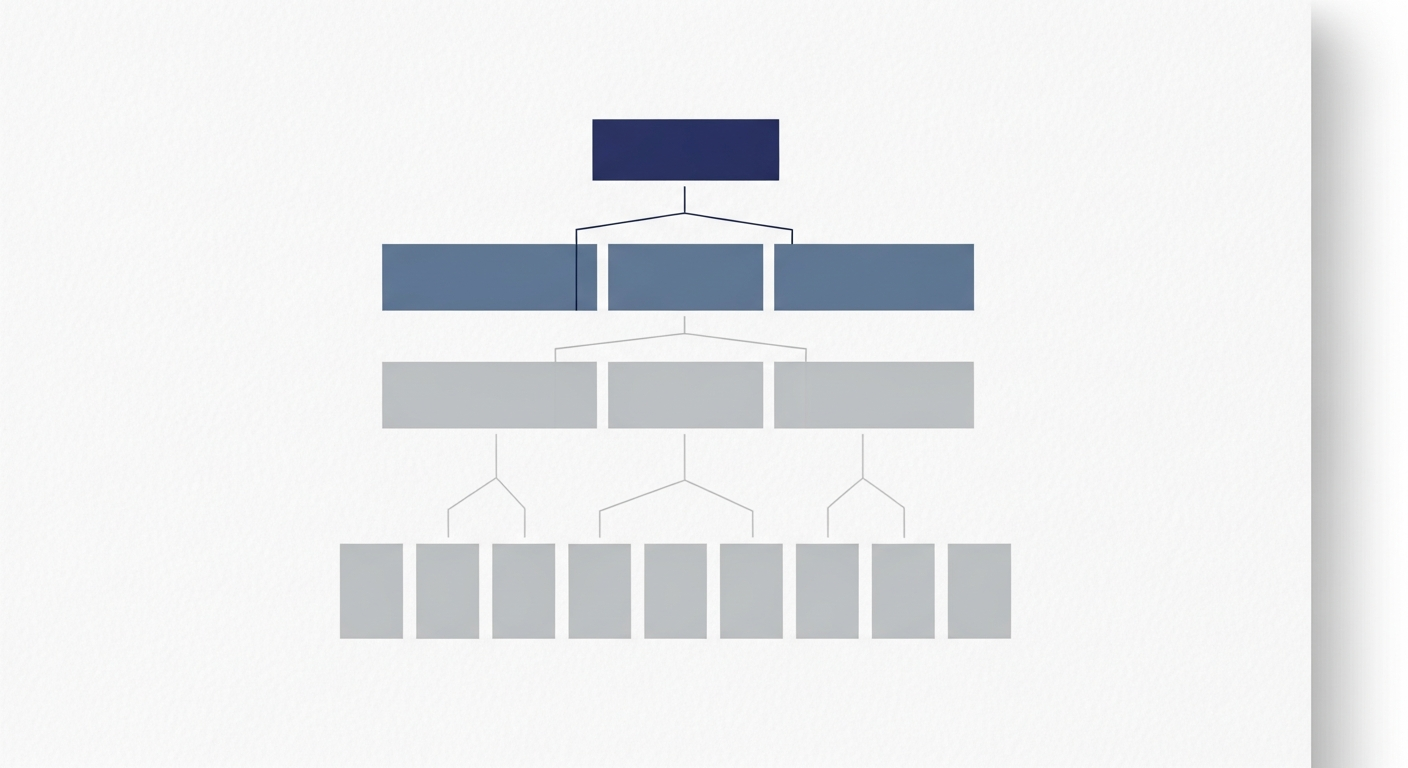
7 種結構聽起來多,會議現場其實 5 秒可以選完。3 個判斷題就能定位你該用哪個結構:
- 判斷 1:聽眾期待你給 takeaway 還是給選項?給 takeaway → PCS(已知 problem)/ Pyramid(要 main message);給選項 → Comparative Analysis(多選項評估)/ Scenario Mapping(多情境)。
- 判斷 2:你要處理「現在」還是「未來」?處理現在 → PCS / Comparative Analysis;處理單線未來 → Future Projection;處理多線未來 → Scenario Mapping。
- 判斷 3:你的內容能用 1 條主線講完嗎?能 → PREP / SCQA / PCS / Future Projection;不能 → Comparative Analysis / Scenario Mapping / Pyramid。
實戰場景對應:7 個非顧問場景的結構推薦
| 場景 | 推薦結構 | 第二選擇 |
|---|---|---|
| 季度業績回顧 | PCS | Pyramid |
| 新產品提案 | PCS | Pyramid |
| 預算評估 | Comparative Analysis | Pyramid |
| 進入新市場 | Scenario Mapping | Comparative Analysis |
| 談判(爭資源) | Future Projection | PCS |
| 顧問 deck 整體 | Pyramid | — |
| 30 秒電梯 pitch | PREP | SCQA |
判斷錯了不致命——錯誤更常見的是「沒判斷、直接按 PowerPoint 模板講」。下次提案前先過一次決策樹,5 秒內可以定位完。
3 個英文簡報結構練習法(從 reverse engineer 到 self-build)
練習法 1:拆 McKinsey 公開報告(reverse engineer)
到 McKinsey Insights 挑一份公開 PDF(推薦 8-15 頁的 M&A Annual Report 2025),執行「3 遍拆解法」:第一遍翻到 Executive Summary、找出粗體第一句(governing thought)。第二遍看每個 chapter 開場 paragraph,判斷用 PCS、Comparative Analysis、Future Projection 還是 Scenario Mapping。第三遍把議題換成你公司的,用同樣的 Pyramid 骨架重寫一份。McKinsey 內部叫這個結構 SCR(Situation-Complication-Resolution,Resolution 佔 60-70%)——比從零建結構快 5 倍。延伸請看 商務英文寫作完整指南。
練習法 2:30 秒 Action Title 改造(McKinsey 顧問即時感)
McKinsey 風格 3 個語感特徵中(Action Title / Bold-bullet / SCR ratio),Action Title 改造成本最低、效果最大——今晚就可以做。每張投影片的標題必須是「行動標題」(articulates the so-what),不是描述性標題。對照範例:
- 描述性標題(普通):「2024 Q3 業績趨勢」
Action title(顧問):「Q3 業績下滑主因為日本子公司,需立即啟動復甦方案」 - 描述性標題:「Competitive Landscape」
Action title:「We trail competitors on cost-to-serve by 3x — automation gap is the root cause」 - 描述性標題:「Strategic Options」
Action title:「Option C delivers the only path that doesn’t trade off long-term equity for short-term ROAS」
Sanity check:把這張 slide 抽掉,光看標題,聽眾能不能 act?如果不能,標題還在 description 層、不在 takeaway 層。今晚拿出你最近一次的 deck,把每張標題從 description 改成 action——一夜之間「聽起來像顧問」。
練習法 3:1 議題 3 結構講法(self-build)
同一個 topic(例:「明年要不要做 AI 客服」),用 3 個不同結構各講 1 分鐘——PCS、Comparative Analysis(vs human-only / hybrid / pure AI)、Scenario Mapping(3 個未來情境)。你會發現:同一內容包進不同結構,「聽起來像誰」完全不同。這個練習也會曝露你哪個結構撐不住——那就是要補強的地方。單一框架深度拆解請看 CBA 框架單框架拆解。
結構從 formulaic 到 invisible:自學的 3 個階段
學習者通常經歷 3 個階段:Level 1 Formulaic(明顯背稿、句句卡頓)、Level 2 Conscious(知道自己在用結構但還不熟)、Level 3 Invisible(結構成為反射)。多半 6-8 週需要被外部糾正的真實 production 才能進到 Level 3。自學者最大的 3 個盲點:第一,自己錄音自己聽不出問題——耳朵習慣自己的語感,會自動 normalize 掉 Argument 跳階、PCS cause 停在 symptom 層這些細節。第二,找不到人能拆解到「Argument 2 的 evidence 跳了一階」這個精度——一般 conversation partner 給不了這層回饋。第三,Level 2 → Level 3 的 plateau 通常需要外部 pressure——時間限制 + 真實對手挑戰,formulaic 才會被磨成 invisible。延伸看 結構內化的 3 個階段。
你卡在哪一個結構?
回到開頭兩位 PM——PM B 不是天才,他只是練過 Scenario Mapping 結構。但讀到這裡你會發現,英文簡報結構的瓶頸不是「不知道」,是「沒有對手挑戰你的論述」。Level 3 Invisible 不會從讀更多文章長出來,會從真實對手感的反覆 production 長出來——有人即時拆解你「Argument 2 的 evidence 跳了一階」這個精度,套路才會內化成反射。
TutorABC 劍橋商務英文進階課程是這個對手感的訓練場:每堂課 1 個簡報結構、外師依劍橋認證教學架構即時陪你 role play 7 種結構,當下糾正你 Pyramid 中層 argument 跳階、PCS 的 cause 還停在 symptom 層、Scenario Mapping 不 MECE 等高頻問題。結構糾正不是教學者主觀,是劍橋認證教學專家受訓的核心 framework——這意味著你被糾正的,是有國際標準依據的真正進階點。免費試聽一堂思辨表達課,測一下你卡在哪個 structure。也歡迎回頭看 7 個高階英文思辨框架完整地圖,把今天學的 7 種簡報結構回扣到母語者論述邏輯的整體圖像。


姓名
國碼
手機